
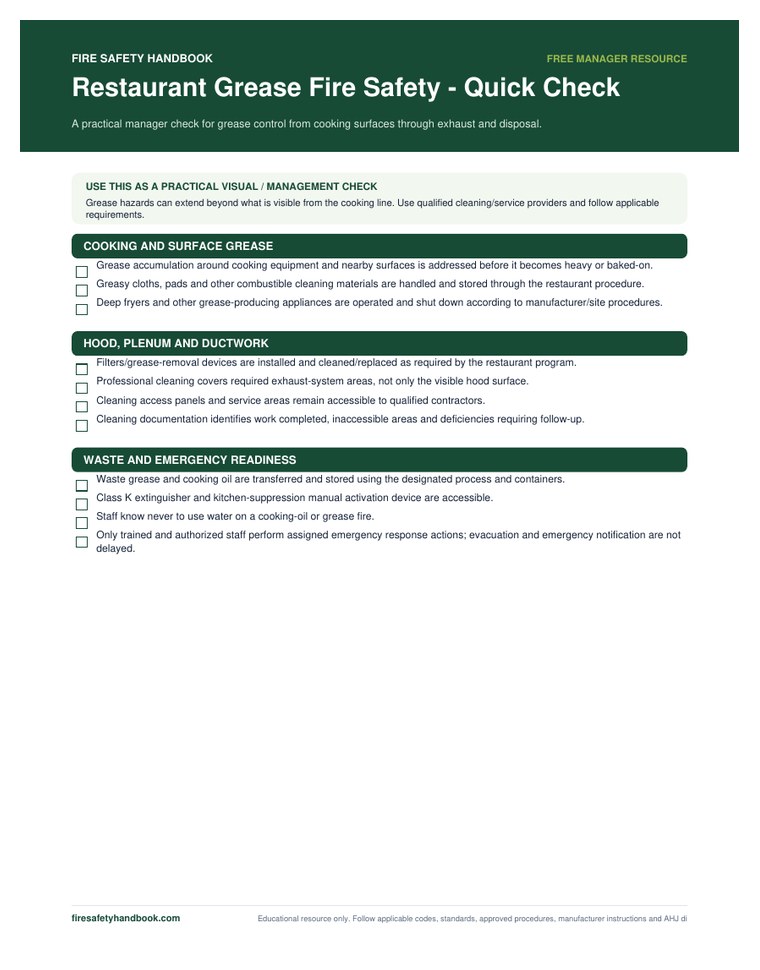
Grease fire prevention is not one cleaning task. Grease can collect on cooking equipment, nearby surfaces, filters, the hood, plenum, ductwork, fan/discharge areas and in waste-handling areas. Managers need a program that controls accumulation, verifies professional cleaning where required, and keeps staff ready for the correct emergency response.
Restaurant Grease Fire Safety - Quick Check
A printable manager check that follows grease from the cooking line through exhaust and disposal.
Start at the cooking surface
Frequent removal of grease around appliances helps prevent routine splatter and residue from becoming a fuel package. Pay attention to equipment edges, adjacent surfaces and areas where cleaning is difficult or repeatedly deferred.
Keep grease-removal devices in place and maintained
Filters and other grease-removal devices should be installed as designed and maintained through the restaurant program. Bypassing or removing them can allow more grease into parts of the exhaust system that are harder to see and clean.
Verify the full exhaust-system cleaning scope
A clean visible hood does not prove the plenum, ductwork, fan and discharge are clean. Qualified cleaning reports should identify the areas serviced, inaccessible conditions and any deficiencies that require manager follow-up.
Control waste grease and oily materials
Used oil, grease-laden waste, oily cloths and cleaning materials need designated handling and storage. Containers should be appropriate for the material and positioned so waste does not create a new fire hazard near heat or ignition sources.
Know the cooking-oil/grease fire response
Staff should know never to use water on a cooking-oil or grease fire. Trained and authorized employees should understand the restaurant’s sequence involving alarm/notification, evacuation, fixed suppression/manual activation and Class K extinguisher use where applicable.
Review after cleaning and after changes
Cleaning reports, appliance changes and menu/process changes can reveal new risk. If the cooking line produces more grease or equipment is moved, make sure cleaning and suppression arrangements are reviewed through the appropriate qualified process.
Frequently asked questions
Is cleaning the hood surface enough?
No. Grease can accumulate through the exhaust path. The required cleaning scope should address the applicable hood, plenum, ductwork, fan and discharge areas.
Can water be used on a cooking-oil or grease fire?
No. Water can cause burning oil to spread violently. Follow the restaurant’s trained emergency response using the appropriate fixed suppression/Class K strategy where applicable.
What should managers look for on a cleaning report?
Work completed, areas accessed, inaccessible sections, deficiencies, recommendations and any follow-up that needs to be assigned.