
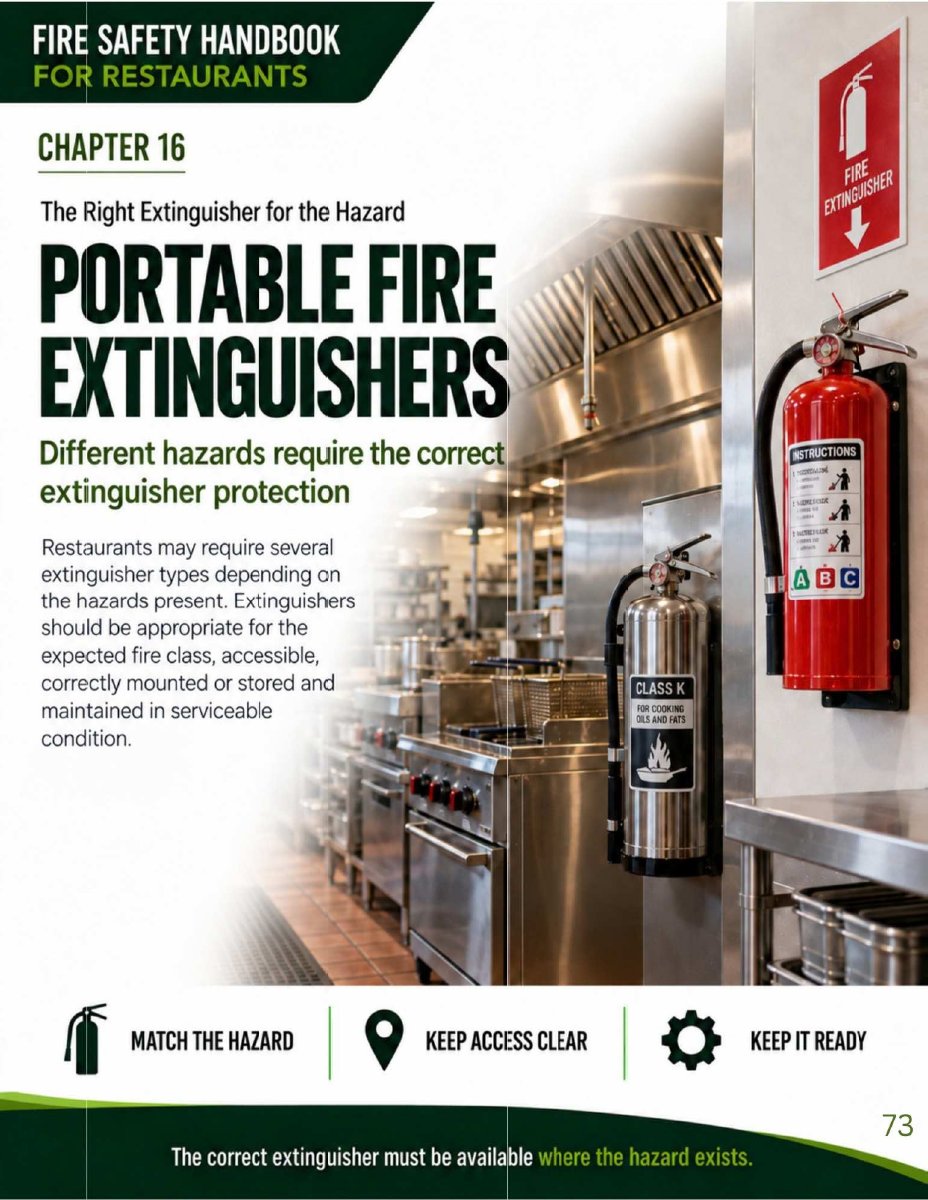
Class K wet-chemical extinguishers are specialized protection for fires involving commercial cooking oils and fats. They are not simply another multipurpose extinguisher, and they do not replace the restaurant’s fixed cooking-suppression system or emergency procedure.
Know the hazard it is intended for
Class K is intended for commercial cooking-oil and fat fires. Staff should be able to identify the correct extinguisher by its rating and equipment identification rather than relying on cylinder colour.
Keep it visible and accessible
The extinguisher should remain visible, unobstructed and located so a trained user does not need to move toward the fire to reach it.
- Do not block it with carts, storage or equipment.
- Keep required identification and signage visible.
- Report missing, damaged or discharged equipment.
Understand the relationship with fixed suppression
Where a fixed cooking-suppression system is provided, staff should know the restaurant’s emergency procedure and how the fixed system relates to the portable Class K extinguisher. The extinguisher is additional protection, not a substitute for required fixed suppression.
Portable extinguisher use is limited
Only trained and authorized personnel should attempt extinguisher use where that is part of the restaurant’s emergency procedure, the fire remains small, conditions are safe and a clear escape route remains available.
Know when not to fight the fire
Do not attempt extinguisher use when the fire has grown beyond a safe incipient stage, smoke or heat makes conditions unsafe, a safe escape route is not available, the employee is not trained or authorized, or there is doubt about safe approach.
Never use water on burning cooking oil
Water can violently spread burning cooking oil. Do not use water, ice or wet towels on a cooking-oil fire, and do not carry a burning pan or fryer basket.