A commercial kitchen concentrates heat, grease, fuel, electrical equipment and fast-paced staff activity in a small area. Effective fire safety therefore depends on how the whole system works together: cooking equipment, grease-removal devices, hood/plenum/ductwork, the exhaust fan/discharge, the suppression system and the staff response.
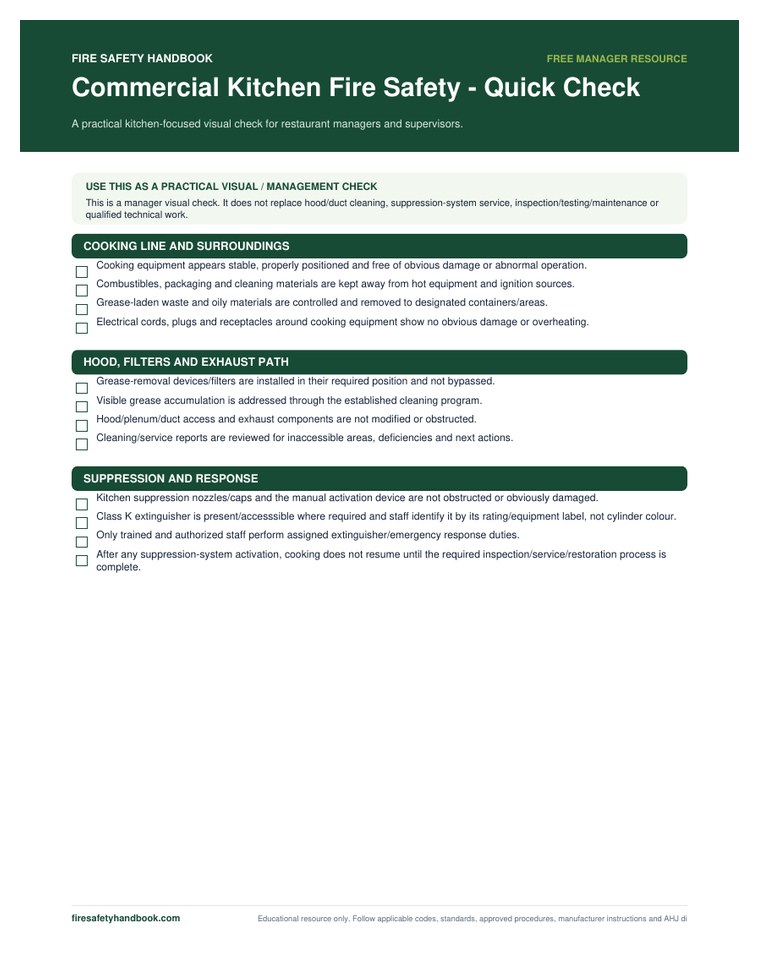
Commercial Kitchen Fire Safety - Quick Check
A kitchen-focused manager checklist covering cooking, grease, exhaust, suppression and emergency readiness.
Control the heat at the cooking line
Use cooking equipment as intended, keep combustibles away from heat-producing appliances, and report abnormal heat, sparking, leaks, damaged controls or repeated equipment faults. Do not normalize a condition simply because the kitchen has operated that way before.
Treat grease as a system-wide hazard
Grease can accumulate on equipment and visible hood surfaces, but also in grease-removal devices, the plenum, ductwork, fan and discharge areas. Cleaning programs should address the full exhaust path as required, not just the surfaces staff can easily see.
Keep hood filters and grease-removal devices in their required position
Removing, bypassing or operating without required grease-removal devices can change the performance of the exhaust/suppression arrangement and allow grease to travel into areas where it becomes harder to inspect and clean.
Protect the kitchen-suppression system from casual changes
Manual activation devices, nozzles and protected appliance arrangements should remain accessible and unobstructed. Changes to appliances or hood layout should be reviewed by qualified parties so the protection remains appropriate for the actual cooking hazards.
Use the correct extinguisher for the hazard
Commercial cooking-oil and grease hazards are associated with Class K extinguishers where required. Staff should identify extinguishers by the rating/equipment label, not cylinder colour. Water should never be used on a cooking-oil or grease fire.
Train staff for the first minute
Staff should know how to alert others, call emergency services, evacuate and use the restaurant’s manual suppression/extinguisher procedures if they are trained and authorized. The goal is a clear sequence, not improvisation during a rapidly changing fire.
Review the kitchen after changes
New equipment, menu changes, altered oil use, added countertop appliances or changes to storage can introduce new hazards. Include fire-safety review in operational changes rather than waiting for the next service visit.
Frequently asked questions
Can restaurant staff clean the entire hood and duct system themselves?
Routine surface cleaning and qualified exhaust-system cleaning are different tasks. Follow the cleaning program, applicable requirements and qualified-service needs for the full system.
Why does equipment placement matter to the suppression system?
The system is designed around protected hazards and appliance arrangements. Moving or changing equipment can affect nozzle coverage or system suitability.
Is a Class K extinguisher a substitute for the kitchen suppression system?
No. Portable extinguishers and fixed suppression systems have different roles and one should not be treated as a replacement for an impaired required system.