
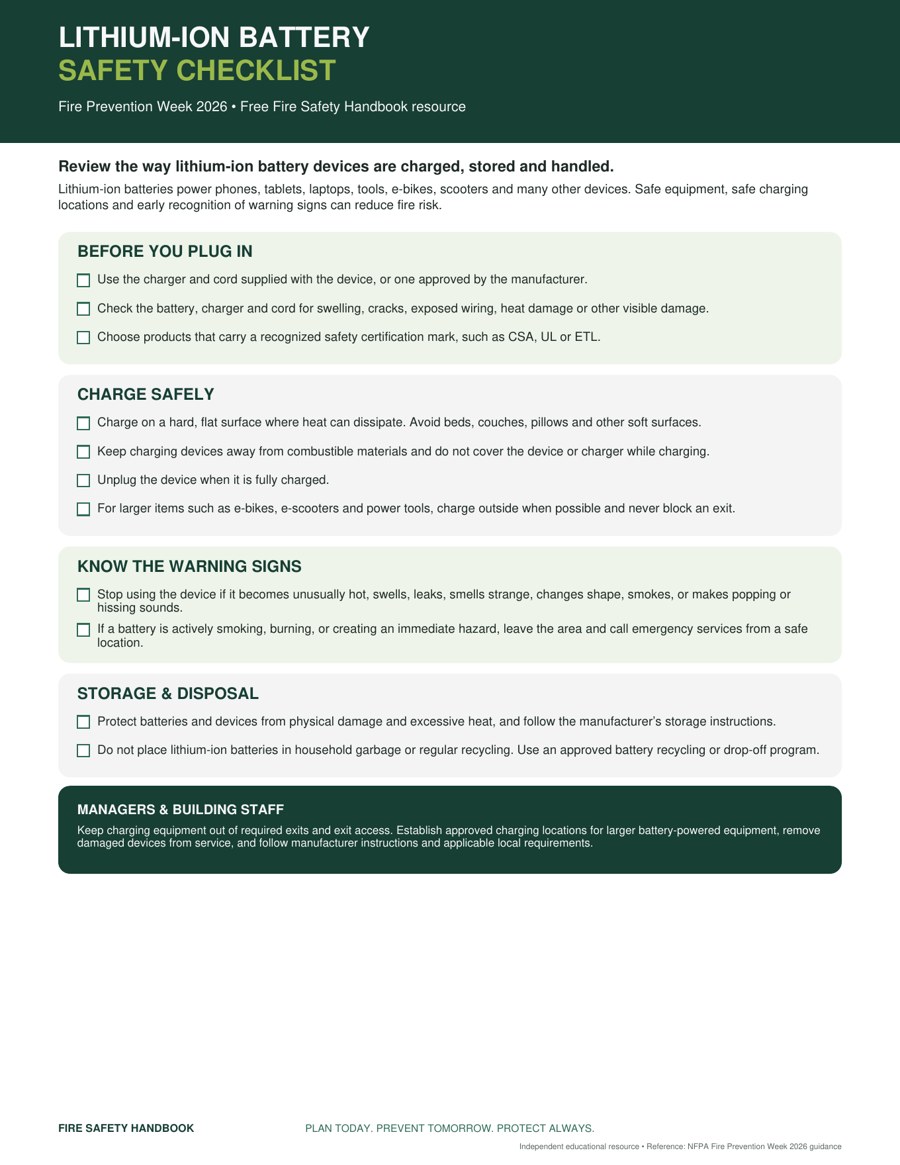
Fire Prevention Week runs from October 4–10, 2026. This year’s National Fire Protection Association (NFPA) campaign, “Charge into Fire Safety: Safe Charging is a Superpower™,” focuses on everyday charging practices that can help reduce lithium-ion battery fire risk.
Lithium-ion batteries are found in phones, tablets, laptops, power tools, e-bikes, e-scooters and many other products. They store a significant amount of energy in a compact package, which is why damaged batteries, incompatible chargers and unsafe charging locations deserve attention.
Use the correct charger
Use the cord and charger supplied with the device, or a replacement approved by the manufacturer. An unsuitable charger can damage a battery and increase heat or fire risk. When purchasing products, look for equipment listed by a recognized safety testing laboratory, such as UL, ETL or CSA.
Charge on a hard, flat surface
Devices and chargers create heat during normal charging. Beds, couches, pillows and other soft surfaces can trap heat and restrict airflow. Charge on an appropriate hard, flat surface instead.
Unplug when fully charged
Disconnect a device when charging is complete. Leaving a fully charged device plugged in longer than necessary can increase heat and stress on the battery.
Keep exits clear
Large battery-powered items such as e-bikes, e-scooters and power tools store more energy. NFPA recommends charging these items outside when possible. Charging equipment must not obstruct a required exit or exit route.
Know the warning signs
Stop using a device if the battery becomes unusually hot, swells, leaks, smells strange, changes shape, smokes, or makes popping or hissing sounds. If a battery is actively smoking, burning or creating an immediate hazard, move people away and call emergency services from a safe location.
Do not put lithium-ion batteries in regular garbage or recycling
Follow the manufacturer’s disposal instructions and use an appropriate battery recycling or drop-off program. Damaged batteries may require special handling, so follow local requirements and the instructions of the collection facility.
What managers and building staff should review
Property managers, restaurant managers and workplace supervisors should know where larger rechargeable equipment is being charged. Keep charging away from required exits, combustible storage and other unsuitable locations. Remove damaged devices from service and establish a clear process for reporting battery concerns.
Make fire prevention an everyday routine
Fire Prevention Week is a useful reminder, but the objective is a routine that continues after October 10. Safer charging locations, working smoke alarms, clear exits, trained staff and prompt follow-up on hazards all contribute to a safer building.
For the official Fire Prevention Week campaign and charging guidance, see the National Fire Protection Association’s 2026 Fire Prevention Week materials.
NFPA Fire Prevention Week 2026 announcement →NFPA 2026 safe-charging tip sheet →