
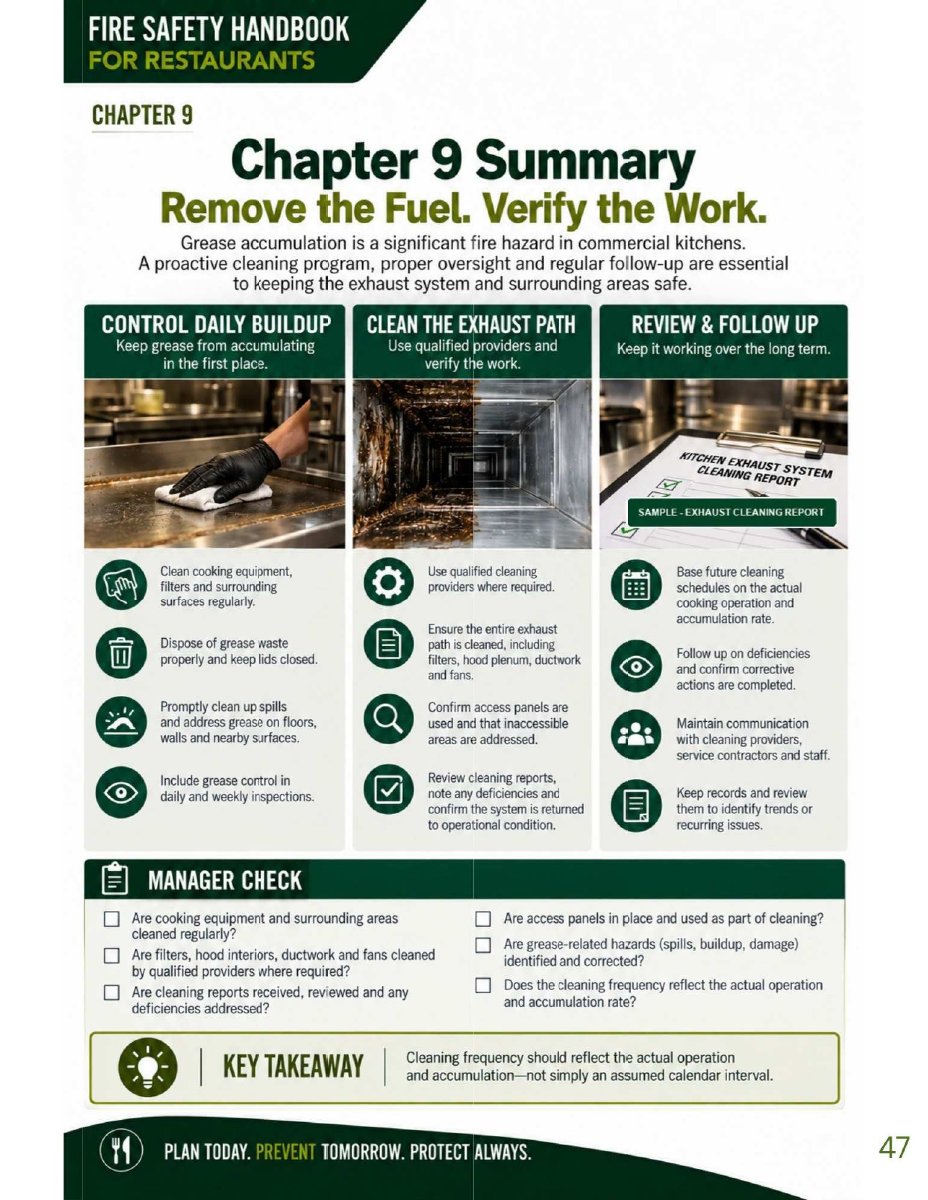
Grease is fuel. It can accumulate on filters, inside the hood, in the plenum, through ductwork, at the exhaust fan and around the roof discharge. A hood that looks clean from below does not prove the entire exhaust system is clean.
Think about the entire exhaust path
Grease-laden vapours move through the interconnected exhaust system. Management oversight should consider the hood, grease-removal devices, plenum, ductwork, fan and discharge area—not just the visible stainless steel above the cookline.
Watch for signs that need attention
Heavy or tacky deposits, dripping grease, grease around the exhaust fan or roof, combustible debris mixed with grease, or repeated accumulation soon after cleaning are warning signs that deserve follow-up.
Plan for access before the cleaner arrives
Review previous reports and outstanding deficiencies, identify difficult-to-access areas and confirm that access panels are present and usable where required.
Clean the full path using appropriate providers
Use qualified providers where applicable requirements call for them. Cleaning should address the exhaust path and hard-to-reach areas, and access panels should be used and returned to their proper condition.
Verify the work after cleaning
Review the post-cleaning condition, photos and documentation. Confirm access panels are closed and secured, deficiencies are addressed and the system is returned to operational condition before relying on it for service.
Use the report as a management tool
Do not simply file the report. Review the scope, note deficiencies, track corrective work and use actual accumulation rates and cooking operations to inform future cleaning schedules.