
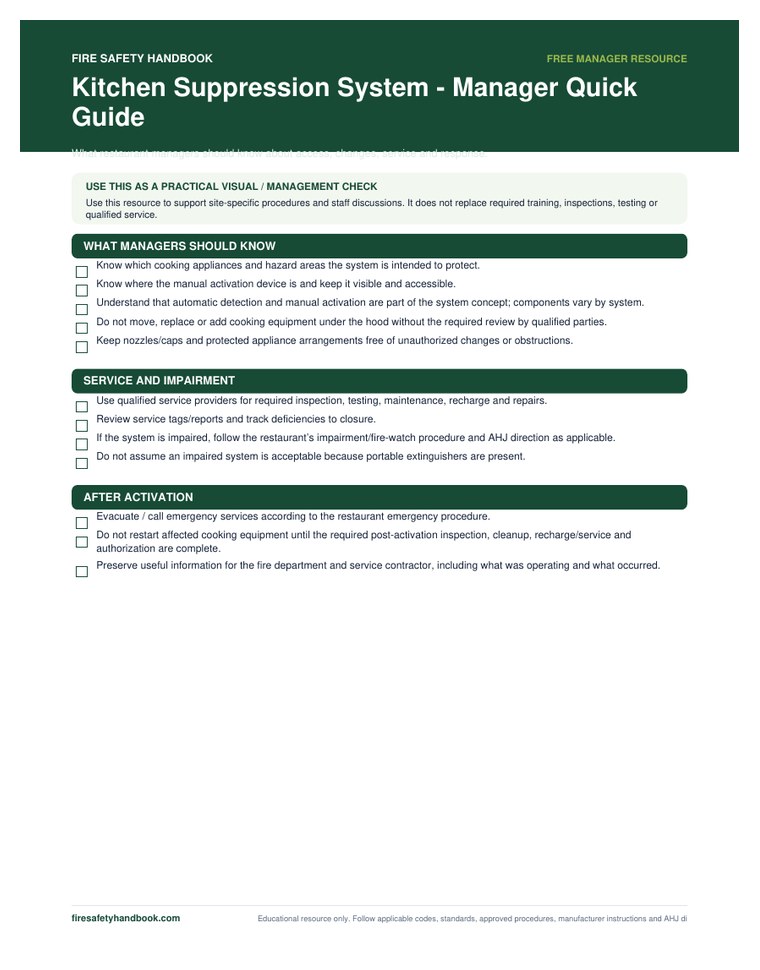
Restaurant managers do not need to service the kitchen suppression system themselves, but they do need to understand what the system protects, how staff activate it, which changes can affect protection, what an impairment means and why cooking cannot simply restart after an activation.
Kitchen Suppression System - Manager Quick Guide
A printable reminder covering access, service, equipment changes, impairments and what happens after activation.
Know what the system is protecting
The system is designed around specific commercial cooking hazards and appliance arrangements. Managers should understand which appliances are protected and who to contact when equipment is added, moved or replaced.
Keep manual activation accessible
Staff who are expected to use the manual activation device should know where it is and how the restaurant’s emergency procedure works. Stock, furniture or decorations should not obstruct access to required manual devices.
Do not treat nozzles and appliance placement as cosmetic
Nozzle position, protected hazard location and system configuration matter. Unauthorized changes can compromise protection even if the hood still looks normal from the dining room.
Use qualified service and read the report
Required inspection, testing, maintenance, recharge and repairs should be completed by qualified persons as applicable. Managers should review the service report for deficiencies and track corrective work rather than relying only on a service tag.
Have an impairment plan
An impaired suppression system can affect whether cooking operations may continue and what temporary measures are required. Follow the site impairment/fire-watch procedure and AHJ direction; portable extinguishers should not be treated as a substitute for an impaired required system.
After activation, do not rush to reopen the line
After a system activation, follow emergency procedures, involve the fire department/service provider as required, and do not restart protected cooking equipment until the necessary inspection, cleanup, recharge/service and authorization are complete.
Train staff for the system they actually have
Generic training is not enough if employees cannot identify the manual activation device or understand the restaurant’s sequence for alarm/notification, evacuation, suppression activation and emergency calls. Use site-specific orientation and refresher training.
Frequently asked questions
Does every kitchen suppression system have a control panel?
No. System components and arrangements vary. That is why this guide uses general system concepts rather than assuming a particular manufacturer or control architecture.
Can cooking continue if the suppression system is out of service?
Do not assume so. Follow the restaurant’s approved impairment procedure, applicable requirements and AHJ direction.
Who can reset or recharge the system after activation?
Use the qualified service process required for the installed system and the applicable requirements. Staff should not improvise a reset and restart.