Opening and closing are two of the best times to catch fire-safety problems. Before service, confirm the restaurant is ready for occupants and cooking. Before the last person leaves, confirm hazards are not being left unattended overnight.
Opening: check exits and routes
Confirm primary and secondary exit routes are clear and exit doors are operable as required. Deliveries, cleaning carts and overnight storage can change conditions after the previous shift.
Opening: check emergency equipment and system status
Portable extinguishers and the kitchen-suppression manual activation device should be visible and accessible. Where staff can view fire-alarm or life-safety panels, unexpected indications should be reported through the established procedure.
Opening: scan the cooking area
Check housekeeping, hood filters and obvious signs of fuel-system or electrical damage. Correct simple obstructions when safe and report equipment or system deficiencies promptly.
Closing: complete the shutdown
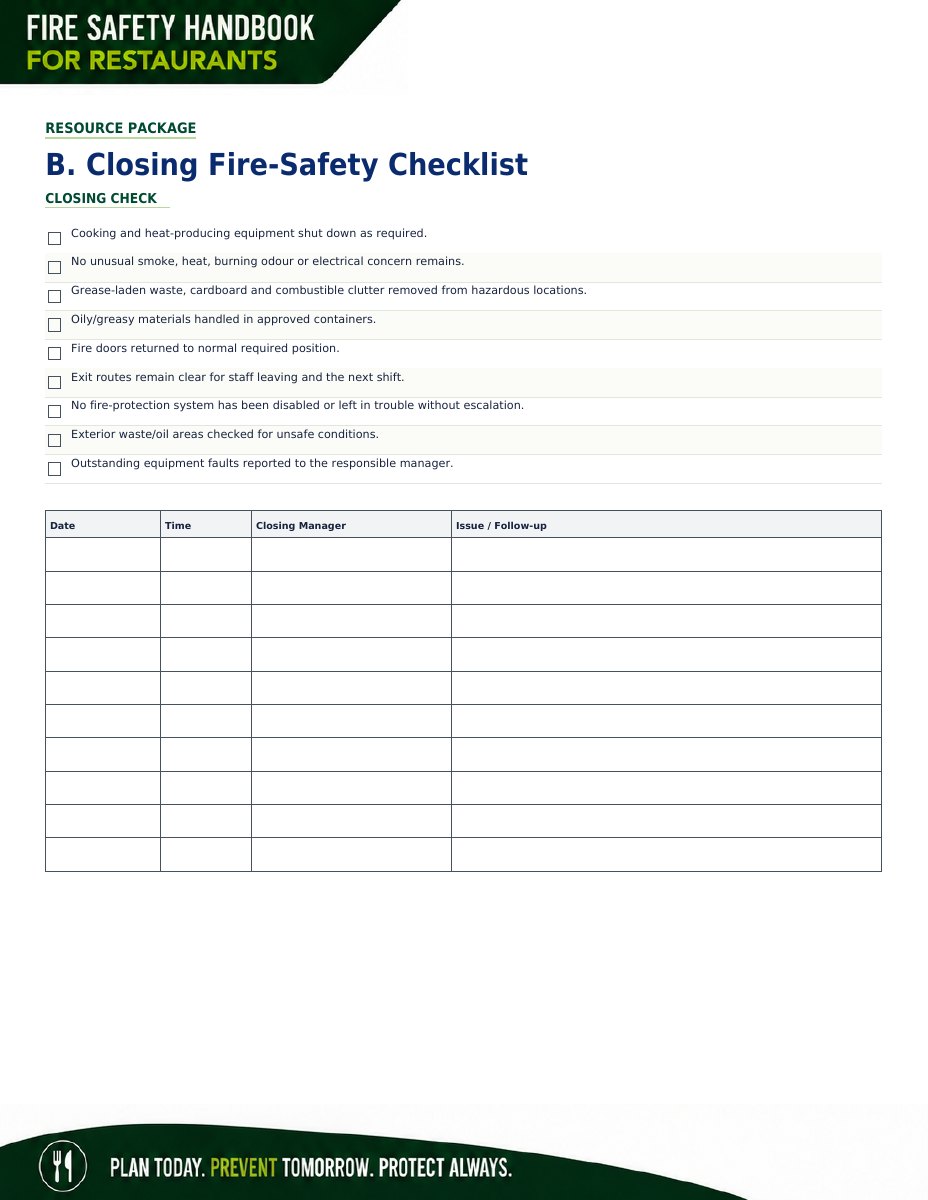
Shut down cooking and other heat-producing equipment according to manufacturer instructions and site procedures. Resolve abnormal heat, buzzing, sparking, burning odours, leaks or equipment faults before leaving through the appropriate response process.
Closing: remove overnight fuel
Handle grease-laden waste, oily materials and combustible clutter through the designated storage and disposal arrangements. Check that fire doors are in their required position and exit routes remain clear.
Document and follow up
Tie the checks to an established opening and closing responsibility. Record deficiencies, assign follow-up and do not assume writing down a concern makes the condition acceptable.