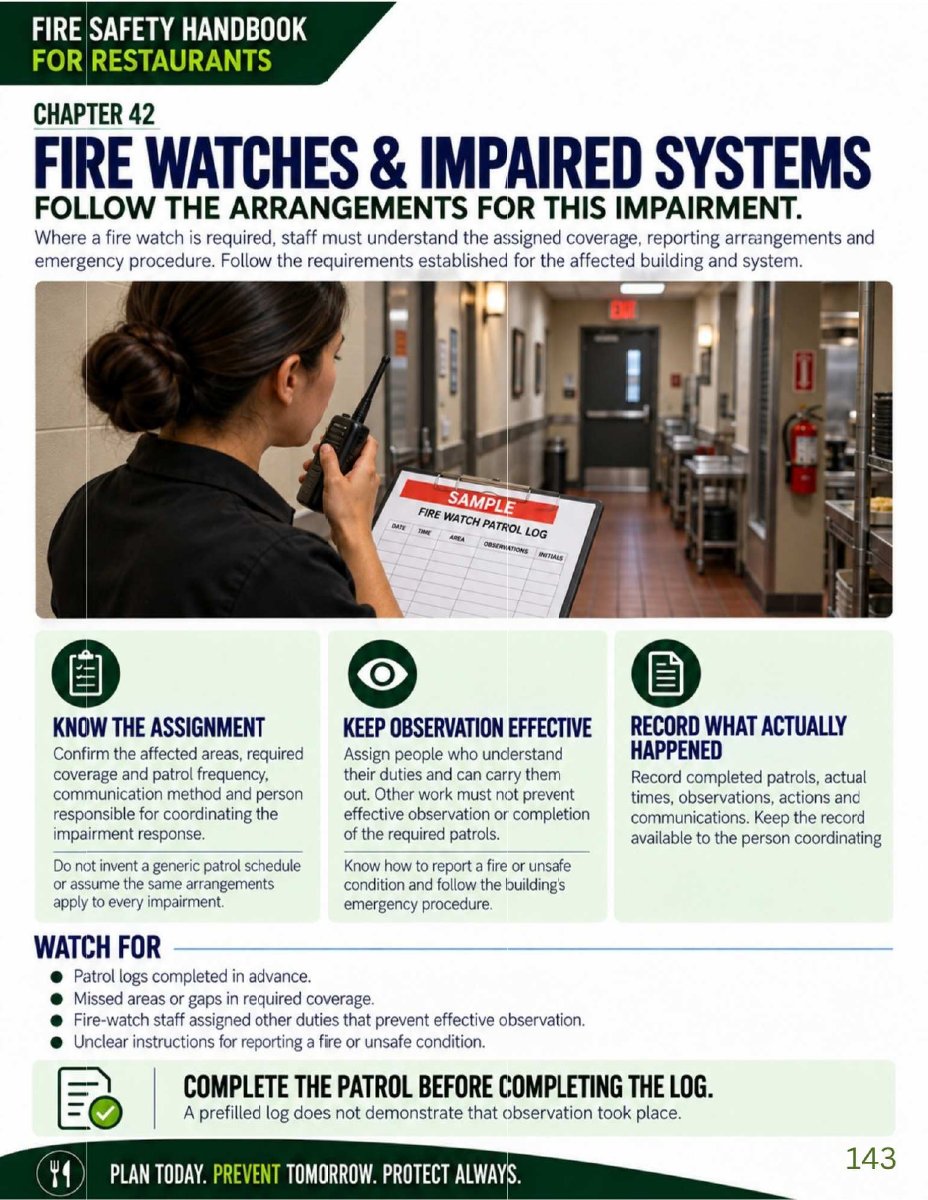
A fire watch is a temporary control used under specific impairment or approved-procedure conditions. It is not automatic permission to keep operating. Restaurant managers need to understand the actual system impairment, the required temporary measures and the authority or procedure that establishes them.
Start with the impairment
Report the impairment through the established procedure and identify what is out of service, which areas are affected and who is responsible for coordinating the response.
Do not invent a generic patrol schedule
Patrol coverage and frequency should come from the requirements established for the affected building and system. The same schedule should not be assumed for every impairment.
Give the fire-watch person a workable assignment
Assigned staff should understand the coverage, reporting arrangement, emergency procedure and communication method. Other work should not prevent effective observation or completion of required patrols.
Record actual patrols and observations
Document completed patrols, actual times, observations, actions and communications. Keep the record available to the person coordinating the impairment response.
Verify restoration before ending temporary measures
Obtain restoration confirmation from qualified personnel as applicable, follow the building procedure and authority direction, complete required notifications and document when temporary measures ended.
Close remaining deficiencies
Retain service reports, impairment records and patrol logs. Any remaining deficiency should be assigned and tracked to verified completion.