
A fire watch is a temporary safety measure used in some impairment or high-risk situations when required by the building’s approved procedures, applicable requirements or the authority having jurisdiction (AHJ). It must be organized for the affected areas and actual conditions—not treated as an informal walk-through.
What does a fire watch involve?
An assigned, instructed person observes the designated area at the specified frequency, watches for signs of fire, knows how to initiate emergency notification, and records each patrol after it happens. The affected system, patrol interval and arrangements must be confirmed for the particular site—there is no universal interval that fits every building.
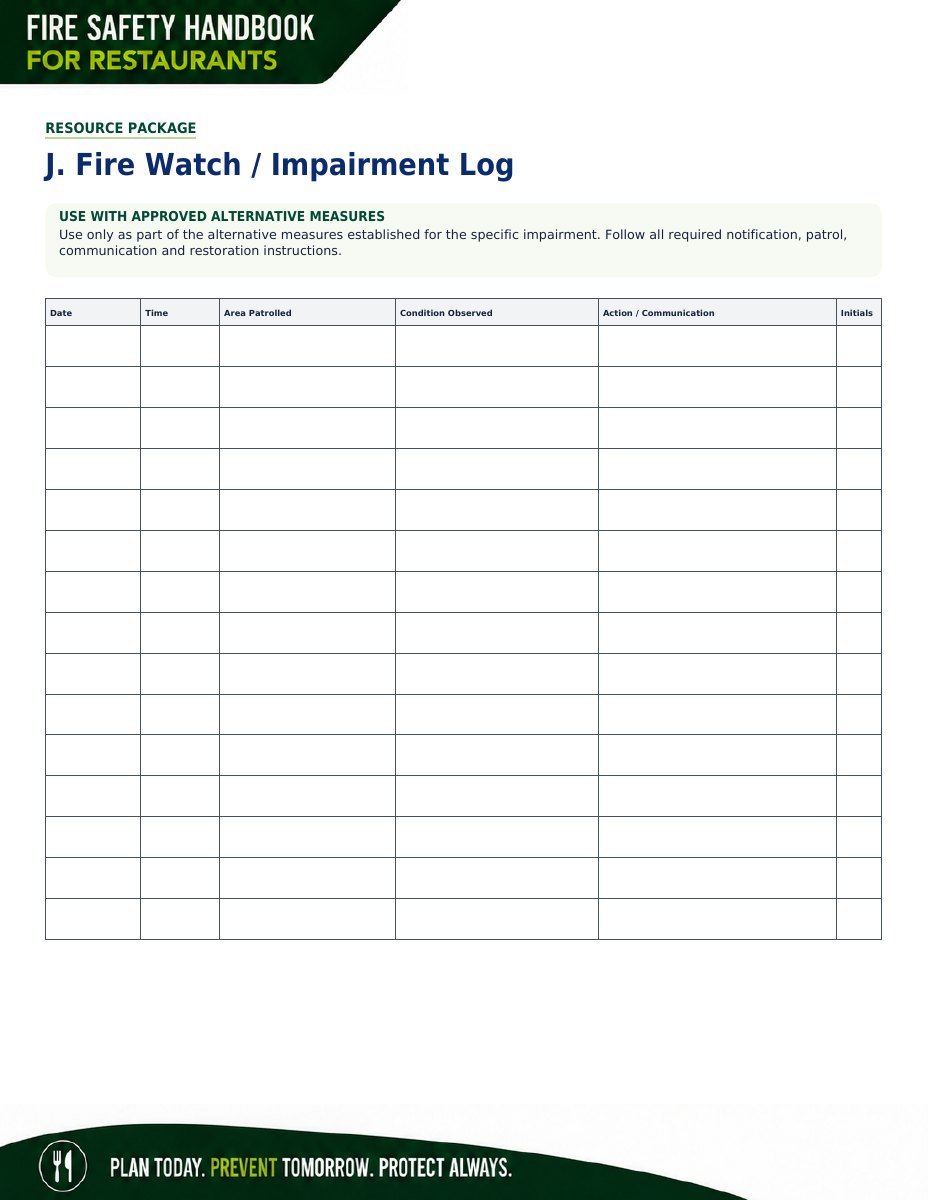
Fire Watch Log + Quick Guide
Use the three-page log to document assigned patrols at the frequency established by the Fire Safety Plan, site procedure and/or authority having jurisdiction.
When a fire watch may be used
A fire watch may form part of the temporary measures used when a required fire-protection system is impaired or when an approved procedure or authority direction calls for one. The exact arrangements are building- and impairment-specific. Do not assume one universal patrol interval applies everywhere.
- Report the impairment through the building’s established process.
- Identify the affected system and areas.
- Confirm who is authorizing and coordinating the fire watch.
- Confirm the required patrol frequency and communication method before patrols begin.
Set up the assignment before the first patrol
The assignment should make the expectations unmistakable for the person on fire-watch duty.
- Affected areas and patrol route
- Start time and expected review or end point
- Required patrol frequency
- Person responsible for coordination
- Radio, phone or other reliable communication method
- Relief or shift-change arrangements
What the patrol should accomplish
The assigned person should be able to observe the required areas effectively and respond according to the building’s emergency procedure.
- Watch for smoke, fire, unsafe conditions and changing hazards.
- Keep required exits and emergency access routes clear.
- Know how to activate the alarm or notify occupants where applicable.
- Do not take on other duties that prevent effective observation.
- Call emergency services immediately if fire or emergency conditions are discovered.
Document the patrol that actually happened
The record should show the real patrol, not a schedule completed in advance. Record the time, route or area checked, conditions found, actions or notifications and the initials or identity of the person completing the patrol.
- Never prefill future patrol times.
- Document findings and actions, not just a check mark.
- Keep the record available to the person coordinating the impairment.
Do not end the fire watch casually
Temporary measures should continue until the applicable restoration procedure is complete. Obtain confirmation of restoration where required, complete notifications, record the restoration time and retain the impairment and patrol records.
- Record who authorized the end of the fire watch.
- Document any outstanding conditions.
- Track remaining deficiencies to verified closure.
Fire watch setup checklist for property managers
Before assigning patrols, confirm the measures that apply to the actual impairment. Use the following to organize the work, not as a substitute for instructions from the responsible authority.
- Impairment: Identify the affected fire alarm, detection, sprinkler or other system and the areas involved.
- Notifications: Contact the monitoring company, fire department or other parties as required by the approved procedure and local direction.
- People: Assign trained and authorized personnel who can complete the watch without competing duties.
- Coverage: Document the required route, frequency, communication method, relief coverage and escalation procedure.
- Recordkeeping: Record the actual time and results of each completed patrol, issues found and notifications made.
- Restoration: Record confirmation that the system is returned to service and who authorized the watch to end.
Common fire watch questions
Is a fire watch automatically required whenever a fire alarm or sprinkler system is impaired?
Not necessarily. The required response depends on the system, extent of impairment, approved Fire Safety Plan, applicable rules and AHJ direction. Promptly report the impairment and confirm the temporary measures that apply.
How often must fire watch patrols be completed?
Use the frequency established for your building and situation by applicable requirements, the approved plan and/or authority direction. Do not assume an interval from an unrelated building or jurisdiction.
Can a fire watch log be completed ahead of time?
No. The log should document the actual patrol time, area checked, observations, action taken and person completing it after the patrol.