Why monthly checks matter
Monthly fire safety checks are not about turning property managers into fire-protection technicians. They are about catching visible problems early, keeping important building features available and making sure deficiencies are recorded and followed up before they become larger issues.
In an apartment building, small conditions can create real problems: a blocked stair, a damaged fire door closer, an exit sign that is not illuminated, storage in front of a hose cabinet or a fire alarm panel showing an abnormal condition. A consistent monthly routine helps the building team notice these issues and route them into the proper correction process.
Start with exits and paths of travel
Exit routes should be available when occupants need them. During a monthly walk-through, building staff can look for storage, furniture, carts, renovation materials, waste bins or other obstructions in corridors, stairwells, exit doors and exterior discharge areas.
Exterior conditions matter too. Snow, ice, landscaping, locked gates, construction fencing or parked vehicles can affect how people leave the building and how firefighters access the property.
- Confirm stairs, corridors and exit doors are clear of storage and obstructions.
- Look for damaged hardware, difficult-to-open doors or doors that do not latch as intended.
- Check exterior exit discharge areas for seasonal or temporary obstructions.
- Report any condition that could delay evacuation or emergency response.
Look at fire doors and separations
Fire doors help limit the spread of smoke and fire when they close and latch properly. Building staff can complete a basic visual review during routine rounds, while repairs, adjustments and technical inspection should be handled by qualified personnel where required.
Watch for fire doors that are wedged open, damaged, missing closers, rubbing on the frame, blocked by storage or failing to latch. Doors held open by approved automatic hold-open devices should release and close as designed when required testing is performed by authorized personnel.
Check emergency lighting and exit signs visually
Emergency lighting and exit signs are easy to overlook until the power fails or smoke affects visibility. A monthly visual check can confirm that exit signs appear illuminated, fixtures are not damaged and equipment has not been blocked, painted over or covered.
Battery or functional testing should only be completed by trained and authorized personnel in accordance with the applicable procedure. If staff notice damaged, missing or non-illuminated equipment, it should be documented and corrected promptly.
Keep fire-safety equipment visible and accessible
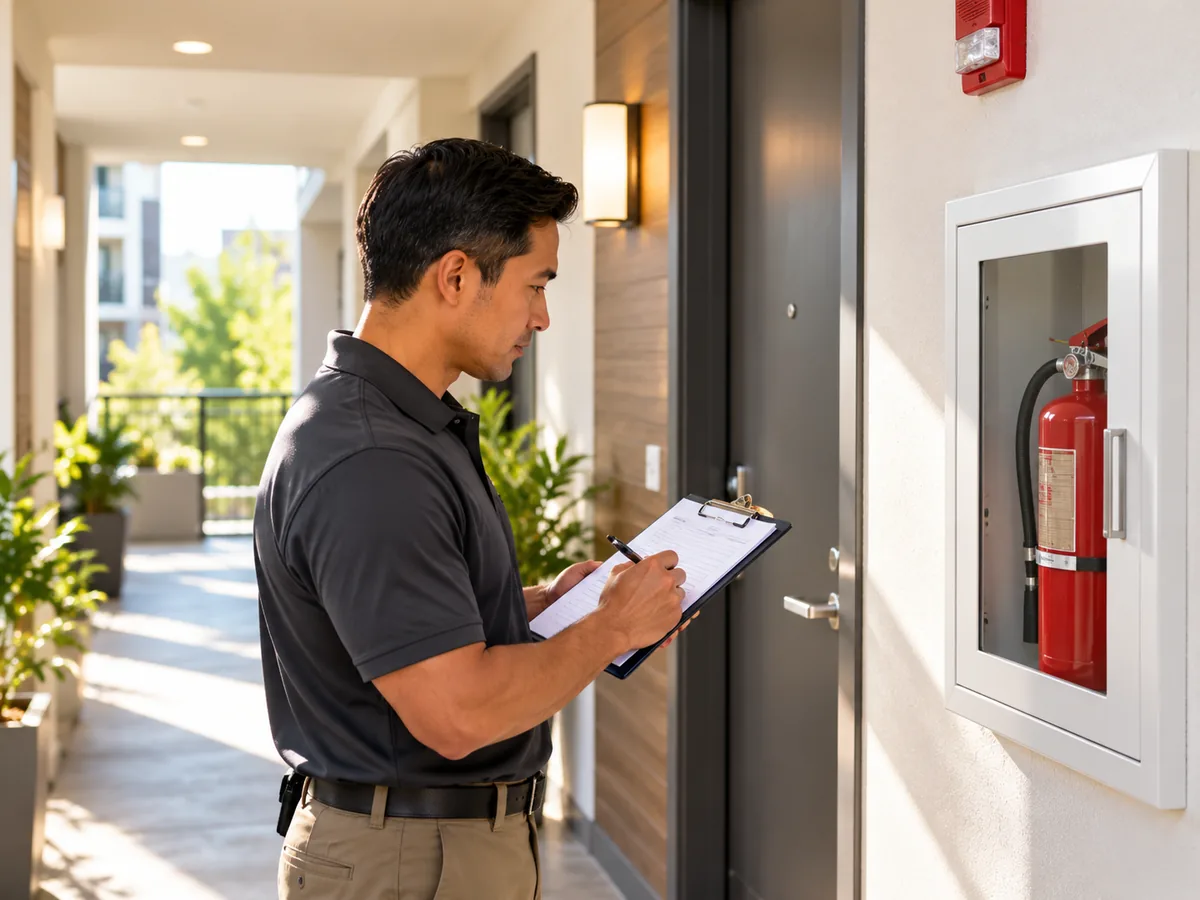
Portable fire extinguishers, hose cabinets, fire department connections, sprinkler control rooms, fire alarm panels and other fire-safety equipment must remain accessible to the people who are authorized to use or service them.
During a walk-through, look for blocked cabinets, missing signs, damaged extinguishers, obstructed access panels, storage in service rooms or anything that prevents quick access to important equipment.
The Fire Safety Handbook Resource Package includes printable and fillable tools for routine visual checks, monthly inspections, fire watch records and emergency building information.
See the Resource Package & Bundle →Review the fire alarm panel condition
If the building has a fire alarm control panel or annunciator, staff should know where it is located and what normal condition looks like. They should also know who is trained and authorized to respond to abnormal conditions.
A panel showing alarm, supervisory or trouble is not something to ignore or casually reset. Follow the building's approved procedure, contact the appropriate service provider or monitoring agency where required and document the condition and response.
Document deficiencies and close the loop
The most useful monthly check is one that creates a clear record. The record should show what was checked, who checked it, what deficiencies were found, who was notified and when the issue was corrected.
A note that says "checked" is less useful than a record that explains the result. If a deficiency remains open, assign responsibility and follow up until the issue is resolved or an approved temporary measure is in place.
A simple monthly routine
- Walk common corridors, stairs, exits and exterior discharge areas.
- Look at fire doors for obvious damage, wedging, closing or latching concerns.
- Confirm exit signs and emergency lighting appear visible and undamaged.
- Check that extinguishers, hose cabinets and fire-safety equipment are accessible.
- Look at the fire alarm panel or annunciator for normal or abnormal condition.
- Record deficiencies clearly and assign follow-up.
- Verify correction instead of assuming the issue was handled.
Monthly checks work best when they are simple, repeatable and documented. They should support the building's approved Fire Safety Plan, required inspection and testing program, service contractor work and direction from the authority having jurisdiction.
Authoritative references and further reading
This guide is educational and intentionally jurisdiction-neutral. Always follow the requirements that apply to your building, including adopted codes and standards, approved procedures, manufacturer instructions and direction from the authority having jurisdiction (AHJ).